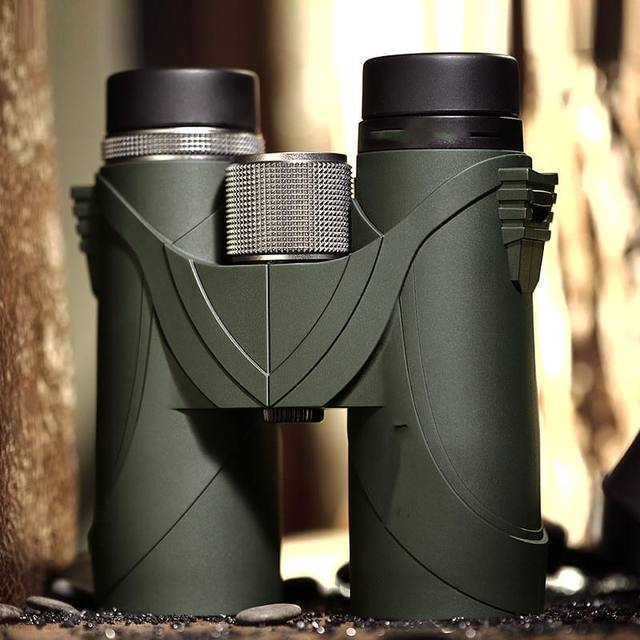
10x42 roof prism binoculars, green
10x magnification 42 mm lenses Roof prism Field 102 m at 1,000 m Green
£59.00
5 products
Full-size binoculars have objective lenses of 40 mm or more. They gather more light than compact models, so the view stays bright at dusk, under trees and on grey winter days. Here you will find roof prism binoculars for birdwatching and walking, a waterproof 12x50 for long views, a classic 10x50 porro for the coast and the night sky, and a wide-field 3x50 that takes in whole constellations.
Compare all models
10x magnification 42 mm lenses Roof prism Field 102 m at 1,000 m Green
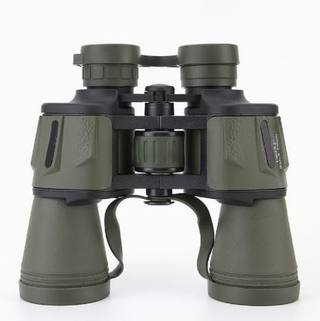
10x magnification 50 mm lenses Porro prism Exit pupil 5 mm Green
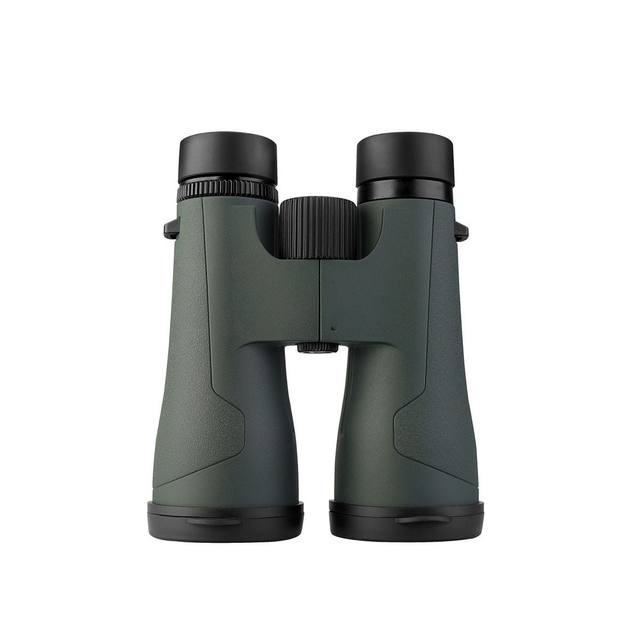
12x magnification 50 mm lenses IPX7 waterproof BaK-4 roof prism Close focus 2.5 m
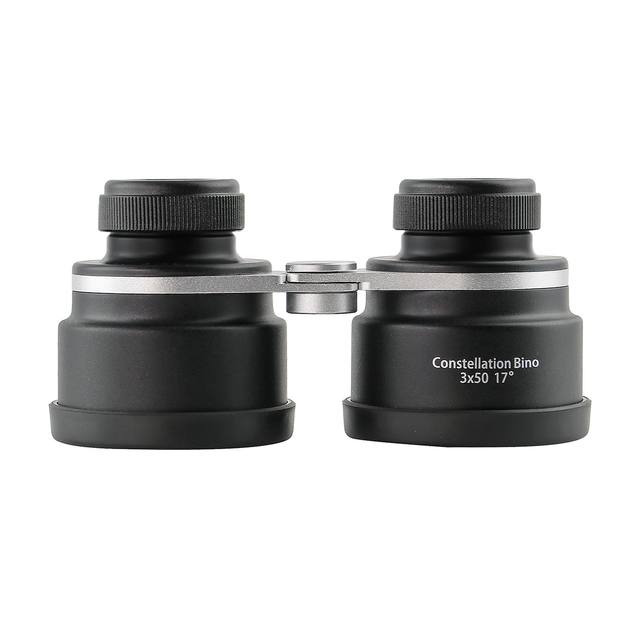
3x magnification 50 mm lenses 17 degree field For star fields About 400 g
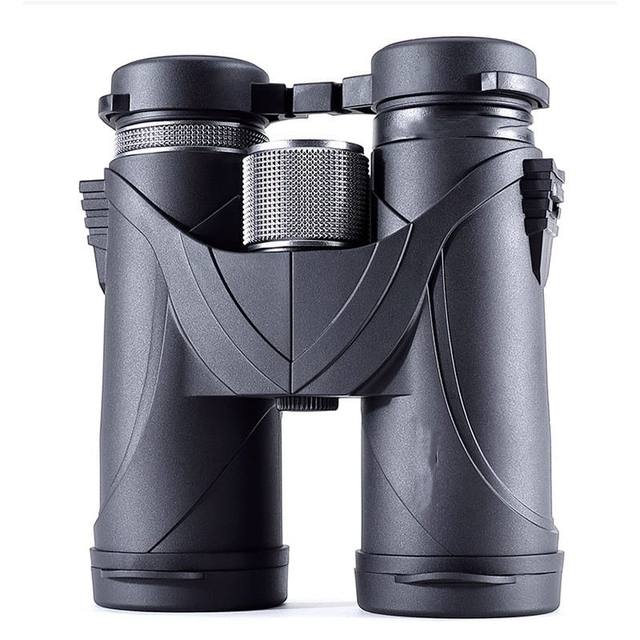
8x magnification 42 mm lenses Roof prism Exit pupil 5.25 mm Black
The first number is the magnification, the second is the diameter of each objective lens in millimetres. An 8x42 makes things look eight times closer through 42 mm lenses. Divide the second number by the first and you get the exit pupil, the width of the beam of light that leaves each eyepiece: 42 / 8 = 5.25 mm for an 8x42, 50 / 10 = 5 mm for a 10x50. A wider exit pupil keeps the view brighter in poor light. What the numbers on binoculars mean goes through every figure on a spec sheet.
Best binocular magnification for bird watching compares them in real birding situations.
Roof prism binoculars have straight barrels. They are slimmer, and easier to seal against water. Porro prism binoculars have the classic offset shape, with the objective lenses set wider apart than the eyepieces. Both designs make good binoculars. The quality of the glass, the coatings and the build matter more than the shape.
A 10x50 is the classic first instrument for astronomy: a 5 mm exit pupil and enough magnification to show craters on the Moon and, held steady, the four largest moons of Jupiter. Very low power binoculars such as our 3x50 show a much wider patch of sky. Read Binoculars for stargazing before your first clear night.
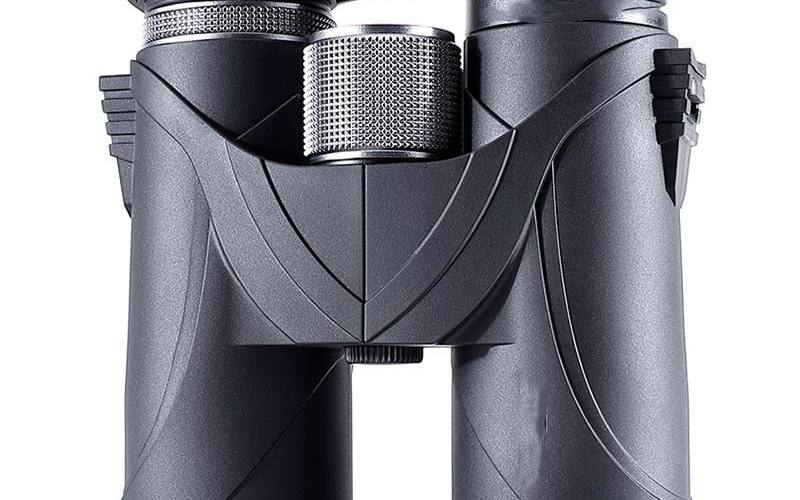
Birdwatching
8x or 10x for birdwatching? How magnification changes field of view, brightness and shake, and which suits woodland, gardens, estuaries and hills.
Basics
What 8x42, 10x50 and 12x50 mean: magnification, lens size, exit pupil, field of view, eye relief, close focus and the other figures on a binocular spec sheet.
Stargazing
Why 10x50 is the classic stargazing size, what binoculars show of the Moon, Jupiter, the Pleiades and Andromeda, and how to hold the view steady.
Neither is better for everything. 8x42 binoculars give a wider, brighter and steadier view, which helps in woodland and with birds that move. 10x42 binoculars show more detail at a distance, which helps over water and open country. If you are unsure, 8x42 is the easier all-round choice.
BaK-4 is a barium crown glass used for the prisms. It has a higher refractive index than the cheaper BK-7 glass, so less light is lost at the edges of the prisms. Hold the binoculars at arm's length and look at the bright circle in each eyepiece: BK-7 prisms often show a squared-off, greyish edge, BaK-4 prisms a round one.
Yes, if the eye relief is long enough and the eyecups twist or fold down. Eye relief is the distance from the eyepiece at which your eye still sees the whole view. With glasses, look for about 16 mm or more and keep the eyecups down.
Added to your cart