Buying advice
Compact vs full-size binoculars: which should you carry?
Compact or full-size binoculars? How 25 mm and 42 mm lenses differ in brightness, field, steadiness and weight, and which suits walks, travel and dusk.
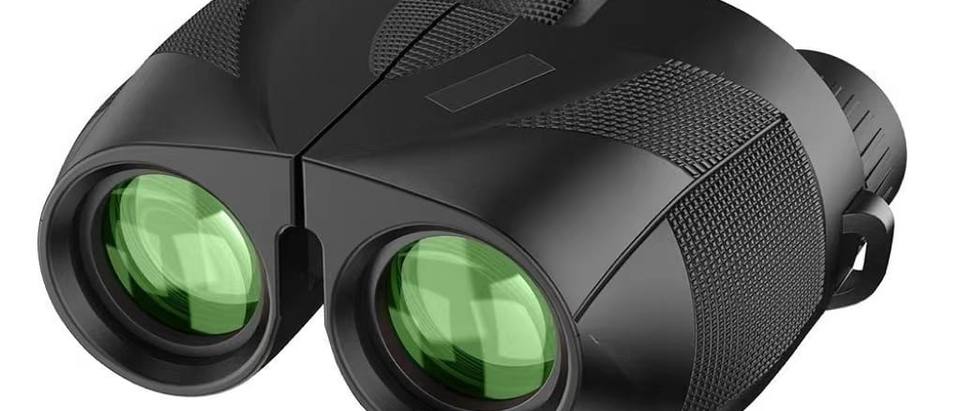
The best binoculars are the ones you have with you. A full-size pair gives the brighter, more comfortable view, but it often weighs 700 grams or more, and many people leave it at home. A compact pair fits a coat pocket and comes along every time. This guide sets out what you gain and what you give up with each, so you can decide which to carry, or whether you want both.
What the sizes mean
Binoculars are grouped by the size of their front lenses, the second number in figures such as 8x42 or 10x25:
- Compact: about 20 to 30 mm, for example 8x21 or 10x25. Pocket sized.
- Mid-size: about 32 mm, for example 8x32. A lighter alternative for birdwatching.
- Full size: 40 mm and more, for example 8x42, 10x42 or 10x50.
Our 10x25 compact binoculars weigh 370 g packed according to the supplier, our 8x42 820 g packed. In the hand that difference is obvious after an hour around your neck.
Brightness: the exit pupil decides
The biggest optical difference is brightness in poor light. Divide the lens size by the magnification to get the exit pupil:
| Binoculars | Exit pupil |
|---|---|
| 8x21 | 2.6 mm |
| 10x25 | 2.5 mm |
| 8x32 | 4 mm |
| 8x42 | 5.25 mm |
| 10x42 | 4.2 mm |
In daylight your pupil is roughly 3 mm across. A compact with a 2.5 mm exit pupil comes close to filling it, so on a sunny day the view looks bright and clear. As the light drops your pupil opens to 5 mm, 6 mm and more. A compact cannot fill it, and the image gets noticeably dimmer than through a full-size pair. That is why compacts struggle in dense woodland, under heavy cloud, at dawn and dusk, and at night.
Field of view and comfort
Smaller binoculars have smaller eyepieces. That often means:
- A smaller sweet spot. You need to line up your eyes more precisely to see the full round image. Small movements cause black crescents at the edge.
- Shorter eye relief on many models, which makes them harder to use with glasses.
- Less to hold. There is less body to grip, which makes steady holding harder, especially at 10x.
Full-size binoculars are more relaxed to look through for long periods. If you watch birds for hours at a time, the difference adds up.
Our 10x25 is marked with a field of view of 112 m at 1,000 m, so at 100 metres you see a strip about 11 metres wide, enough for most daytime use.
Weight and convenience
This is where compacts win outright. A compact pair:
- fits a coat pocket, a bum bag or a handbag
- weighs less than half as much as a typical full-size pair
- is easy to take on holiday in hand luggage
- is a good first pair for older children, who often find full-size binoculars heavy
A full-size pair needs a proper neck strap or a harness, and on a long hill walk you will notice it.
Which suits what
| Situation | Better choice |
|---|---|
| Long hill walks where weight matters | Compact |
| City breaks and holidays | Compact |
| Football, cricket, racing, concerts | Compact |
| Garden birds in good light | Either |
| Woodland birding | Full size |
| Estuaries and reservoirs | Full size, 10x |
| Dawn, dusk, owls and bats | Full size, 8x42 or larger |
| Stargazing | Full size, 10x50 |
The case for owning both
Many people end up with two pairs: a full-size pair for dedicated birdwatching and nights under the stars, and a compact that lives in the coat pocket or the car. If that sounds like you, start with the pair you would use most often, and add the other later.
What about a monocular?
A monocular is half a pair of binoculars. It is smaller and lighter still and works with one hand, which makes it handy for checking a distant waymark, a boat or a bird during a walk. The downside is that you look with one eye, which is less comfortable for longer looks and gives no sense of depth. Our 10-30x42 zoom monocular weighs 279 g according to the supplier. See all monoculars.
Buying compact binoculars for children
Children are the most common users of compact binoculars, and a few checks make a big difference:
- Eye spacing: the hinge must close far enough for the child's eyes. The distance between the centres of the eyepieces has to match the distance between their pupils, which is smaller in children than in adults.
- Magnification: 8x is easier to hold steady than 10x for small hands.
- Focus: show them how to use the central wheel, and set the dioptre for them once.
- Safety: teach them never to look at the Sun through binoculars.
Checking a compact pair when it arrives
A few minutes of checking tells you whether a compact pair suits you:
- Set the hinge. Fold the barrels until you see one round image, not two overlapping circles. If you cannot get a single image, the eyepieces do not close far enough for your eyes.
- Focus on something about 20 metres away with the central wheel, then balance the two eyes with the dioptre ring if there is one.
- Move your eyes slightly behind the eyepieces. If black crescents appear at the slightest movement, practise holding the binoculars a little further from or closer to your face until the view is full and round.
- Try them with and without glasses if you wear them, with the eyecups up and down.
- Look out of a window at dusk and compare the view with a full-size pair if you have one. You will see straight away how the small exit pupil affects brightness when the light fades.
These checks are worth doing with any new binoculars, compact or full size, before the first proper outing.
How to choose in one minute
- If you mainly go out in daylight and want something you will always carry, choose a compact. See our compact binoculars.
- If you go out at dawn and dusk, watch woodland birds or want to look at the stars, choose full size. See our binoculars.
- If you want the lightest possible option for quick looks, consider a monocular.
Still deciding on magnification? Best binocular magnification for bird watching explains 8x versus 10x, and What the numbers on binoculars mean covers the rest of the spec sheet.
Frequently asked questions
Are compact binoculars worth it?
Yes, if you would otherwise leave binoculars at home. A compact pair is easy to carry everywhere and works well in daylight. For dusk, dense woodland and the night sky, a full-size pair is clearly better.
What counts as compact binoculars?
Usually binoculars with objective lenses of about 20 to 30 mm, such as 8x21, 8x25 or 10x25. Mid-size binoculars have around 32 mm lenses and full-size binoculars 40 mm or more.
Why do compact binoculars look darker at dusk?
Because of the exit pupil, the objective size divided by the magnification. A 10x25 has 2.5 mm. At dusk your own pupil opens wider than that, so the binoculars cannot fill it, and the view looks dimmer than through an 8x42 with 5.25 mm.
Are compact binoculars harder to hold steady?
Often a little. They are light and small, so there is less to grip, and 10x compacts show hand shake clearly. Hold them with both hands and tuck your elbows in.
Should I buy a compact pair or a monocular?
A monocular is even smaller and lighter and works with one hand, but you only use one eye. For occasional quick looks a monocular is enough; for watching wildlife for more than a minute or two, compact binoculars are more comfortable.